

The way organizations train their workforce is undergoing a fundamental shift. Across industries, companies are rethinking traditional learning models as new data highlights the transformative impact of immersive technologies. The global extended reality (XR) market is valued at $250 Billion, with education and workforce development among its fastest-growing sectors.
Research shows immersive learners are up to four times more focused than those in conventional classroom settings, while employees trained through simulations report higher confidence in applying their skills.
Businesses exploring immersive technology are increasingly adopting real-world XR simulations for workforce training. Enterprises implementing XR training are already reducing onboarding time, lowering workplace incidents, and significantly cutting travel costs through remote immersive delivery. These results signal more than technological experimentation; they mark the emergence of XR as a strategic, competitive necessity in modern employee training.
What Is XR Training?
XR Training refers to the use of immersive technologies: Virtual Reality, Augmented Reality, and Mixed Reality, to create realistic, interactive training simulations.
Also known as extended reality training, this approach allows employees to practice real-world tasks in safe, digital environments.
Instead of passively reading manuals or watching slide presentations, learners:
- Perform technical procedures in 3D environments
- Engage in real-time decision-making scenarios
- Interact with virtual objects and equipment
- Receive instant feedback
- Repeat complex tasks without risk
This shift from passive instruction to immersive participation is why extended reality in employee training is gaining executive-level attention.
Why XR Training Is Growing Rapidly
1. Closing the Global Skills Gap
Industries are evolving faster than traditional education models can keep up. Corporate XR training enables faster upskilling by simulating real equipment, workflows, and problem-solving environments.
2. Enhancing Workplace Safety
High-risk sectors such as healthcare, aviation, energy, and manufacturing rely on XR training applications to simulate emergency scenarios without real-world danger.
3. Standardising Global Learning
For multinational organisations, enterprise XR training ensures consistent onboarding and compliance training across all locations.
4. AI-Powered Personalisation
Modern extended reality training solutions now integrate AI-driven adaptive systems that adjust difficulty and provide personalised learning paths.
5. Hardware Accessibility
Advancements in immersive devices and spatial computing headsets have lowered barriers to entry, making XR training services more scalable and affordable.
How XR Training Works
A comprehensive XR training solution combines multiple technologies:
- 3D modeling and digital twins: virtual replicas of real equipment, spaces, and processes so people can train on what they’ll actually use.
- Real-time motion tracking: capturing head/hand/body movement, and sometimes tools, so the system can evaluate how a task is performed, not just whether it was completed.
- Interactive task simulation: guided, hands-on practice where learners make decisions, follow procedures, and experience realistic cause-and-effect.
- AI-based analytics: automatically spotting patterns like repeated mistakes, slow steps, missed checks, or inconsistent technique, then turning them into coaching signals.
- Performance dashboards: clear reports for trainers and managers showing proficiency, progress over time, and where individuals or groups need support.
- Multi-user collaboration systems: enabling instructor-led sessions, team drills, and remote participation, so communication and coordination can be trained as well.
Explore how organizations are using immersive technology to train teams and engage audiences.
Main Turning Points for Businesses Using XR Training
When deployed as a full extended reality training service, organizations gain:
- Measurable skill development: objective proficiency scores and completion criteria, rather than relying only on attendance or self-reporting.
- Data-backed performance tracking: comparisons across cohorts, role-based benchmarks, and evidence of readiness before someone moves to live operations.
- Scenario repetition without cost escalation: learners can repeat rare, complex, or hazardous scenarios as many times as needed without additional materials, setup time, or increased safety exposure.
- Reduced equipment wear and tear: early practice happens virtually, so real machines and environments are reserved for final validation and supervised hands-on stages.
This is where data-driven XR training becomes transformative.
Industries Leading XR Adoption
Healthcare
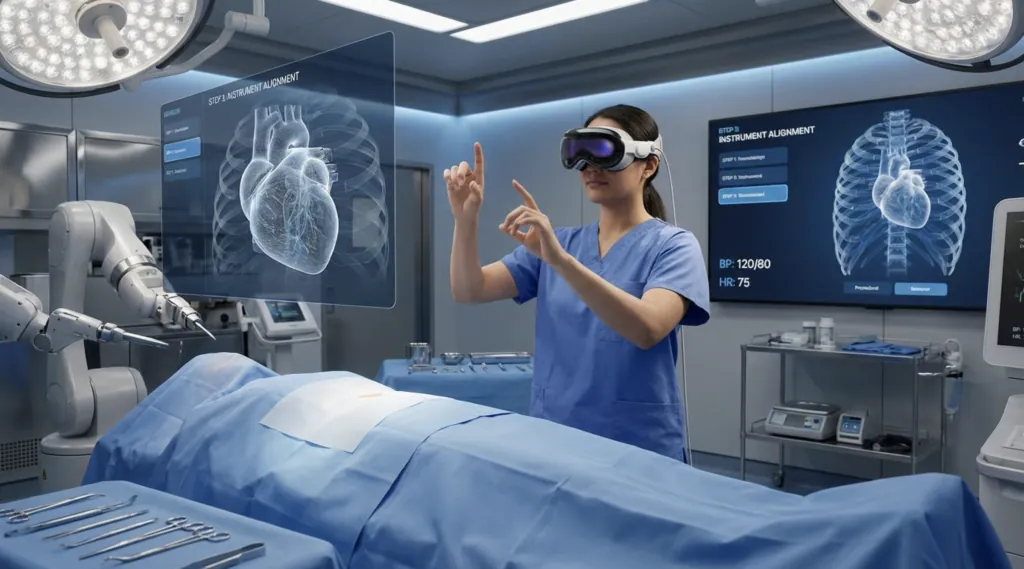
In healthcare, precision is everything. XR enables professionals to train repeatedly, safely, and realistically, without putting patients at risk.
Key applications of XR in healthcare:
- Surgical simulations in immersive VR environments
- Emergency response and CPR training scenarios
- Patient interaction and communication practice
- Risk-free medical procedure rehearsals
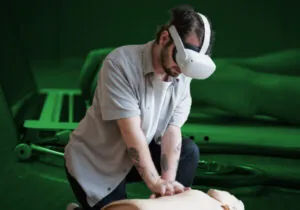
At YORD, we developed VR CPR Training for the Red Cross, an immersive life-saving simulation designed to improve response time and procedural accuracy. The result? Deep engagement and practical skill retention in a controlled digital environment.
Manufacturing & Industrial
Industrial environments demand precision, speed, and safety. XR training applications reduce downtime and accelerate technical proficiency across teams.
How XR transforms manufacturing training:
- Machine handling simulations
- Hazard identification drills
- Maintenance protocol walkthroughs
- Equipment onboarding before physical deployment
We’ve applied immersive technology for industrial storytelling and product showcasing, including complex VR environments built in Unreal Engine for large-scale corporate presentations.
For enterprise clients exploring operational efficiency, we design XR training ecosystems that integrate with existing workflows rather than disrupt them.
Military and Defence
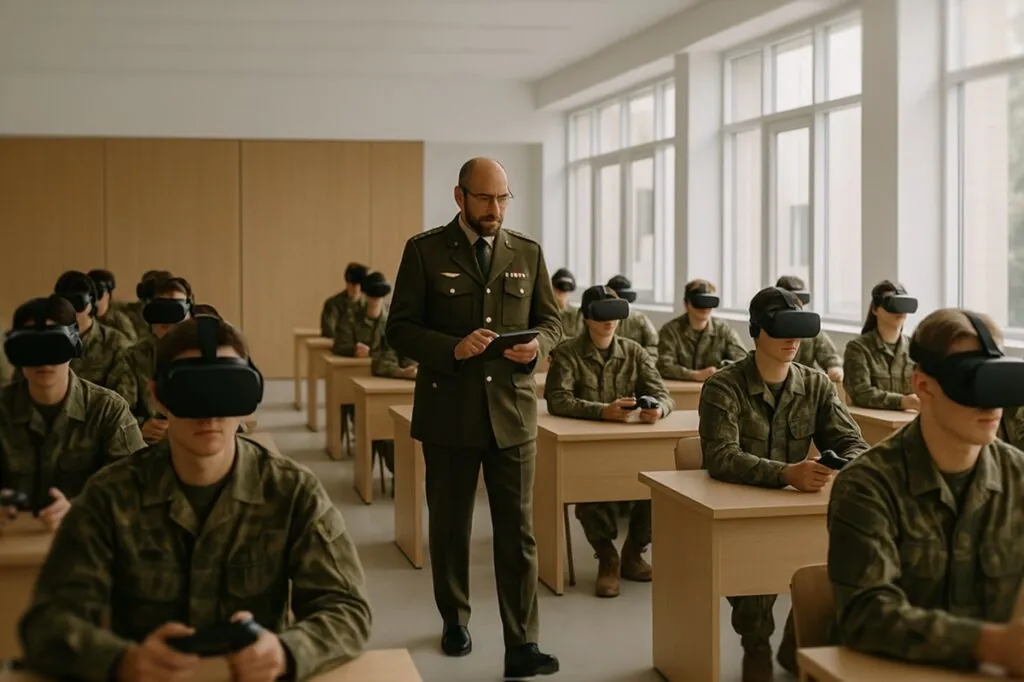
In the military industry, readiness defines performance. XR improves situational awareness while lowering dependency on high-cost physical simulators.
Core XR use cases in Defence:
- Flight simulations in immersive VR
- Emergency evacuation scenario training
- System diagnostics and technical drills
- Crew coordination simulations
YORD’s experience with hyper-realistic simulation environments, including projects leveraging advanced 3D modelling and real-time engines, demonstrates how immersive storytelling and precision technology can merge into powerful training tools.
Corporate & Enterprise

Enterprise XR is reshaping how organizations develop talent and strengthen internal culture.
Corporate XR training applications
- Leadership development simulations
- Diversity and inclusion immersive scenarios
- Sales role-play environments
- Customer service training modules
Why enterprises invest in XR training
- Higher engagement compared to traditional e-learning
- Safe practice for complex interpersonal scenarios
- Measurable performance tracking
- Scalable deployment across regions
XR does not replace human interaction; it refines it.
The Power of Data-Driven XR Training
Traditional training methods rely heavily on subjective evaluation. In contrast, data-driven XR training captures:
- Reaction time
- Decision accuracy
- Compliance tracking
- Error patterns
- Improvement trends
This allows organisations to convert training into a measurable performance optimisation strategy rather than a cost center. A robust extended reality training service integrates analytics dashboards that demonstrate ROI in real time.
XR Training Vs. Traditional Training
| Traditional Training | XR Training |
| Passive instruction | Immersive experiential learning |
| Limited repetition | Unlimited safe simulation |
| High instructor dependency | Scalable digital deployment |
| Low engagement | High retention and focus |
| Subjective evaluation | Measurable performance data |
Rather than replacing traditional methods, XR tech transforms employee training, enhances existing systems, and increases impact.
The ROI of Enterprise XR Training
Organizations adopting enterprise XR training report:
- Faster onboarding cycles
- Reduced workplace accidents
- Lower long-term training costs
- Higher employee confidence
- Improved regulatory compliance
While the upfront investment in an XR training service or extended reality training solution can be significant, long-term operational efficiency often outweighs initial development costs.
The Future of XR Training
The next phase of immersive workforce development will be defined by:
- AI-powered personalisation
- Cloud-based multi-user environments
- WebXR accessibility
- Wearable AR devices
- Integration with enterprise LMS systems
As digital transformation accelerates, extended reality training solution providers are becoming strategic partners in organizational growth . Businesses that invest in XR training solutions today position themselves ahead of competitors in innovation, talent retention, and operational excellence.
Start Your XR Training Journey with YORD
The future workforce cannot rely on theory alone. Modern employee development requires:
- Practical, immersive simulation
- Real-time performance feedback
- Risk-free skill repetition
- Data-driven performance tracking
This is where XR training delivers measurable results.
From corporate XR training programs to advanced industrial simulations, immersive technology enables teams to practice high-stakes decisions, refine technical skills, and strengthen communication in safe, controlled digital environments.
XR in employee training is no longer experimental; it is becoming essential infrastructure. The real question is not whether XR will shape workforce development, but how quickly organizations adopt it to gain a competitive advantage.
At YORD, we design XR ecosystems that transform training into capability.
FAQs about XR Training
1. What is XR training?
XR training uses immersive VR, AR, and MR technologies to safely and interactively simulate real-world training environments.
2. Is extended reality training effective?
Yes. Immersive learning environments significantly improve retention, engagement, and real-world performance application.
3. What industries benefit most from XR training applications?
Healthcare, manufacturing, aviation, retail, military, logistics, and corporate enterprises.
4. What is an extended reality training service?
It is a full-service offering that includes immersive simulation development, deployment, hardware integration, analytics, and ongoing support.
5. Is XR training scalable for large organisations?
Yes. Enterprise XR training solutions can be deployed globally across multiple departments and regions.