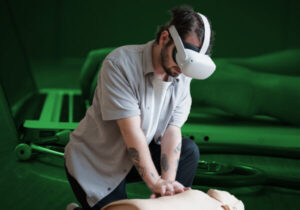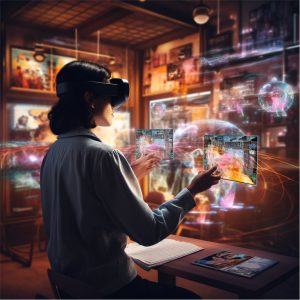


Augmented reality (AR) is finally taking its place as a transformative technology in workplace learning. Unlike traditional methods, AR provides employees with interactive and immersive experiences, allowing them to practice skills, solve problems, and make decisions in real-world contexts while receiving real-time feedback. This hands-on approach increases engagement, knowledge retention, and confidence.
What is Augmented Reality Training?
Augmented reality training, or AR training, uses AR technology to combine virtual elements with the real world, creating an immersive and interactive learning environment. Employees can practice practical skills in realistic scenarios without the need for expensive physical equipment or dedicated training spaces.
Industries such as healthcare, manufacturing, repair, and maintenance have already seen significant benefits by incorporating AR into their training programs. By using augmented reality for training, organizations can modernize their programs, reduce learning time, and provide employees with a more effective, hands-on learning experience.
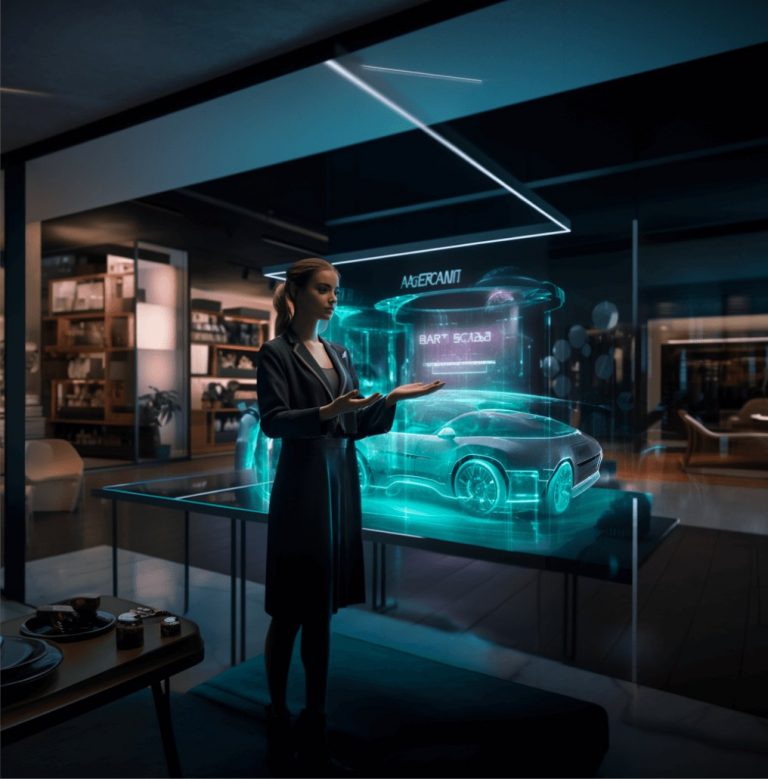
Benefits of Augmented Reality Training for Business
- Interactive Learning: AR training emphasizes hands-on learning rather than passive reading or videos, helping employees acquire skills faster and more effectively.
- Reduced Training Time: Immersive AR experiences improve retention, meaning employees spend less time in training while learning more.
- Better Decision-Making Skills: AR allows learners to practice real-world scenarios safely, building confidence and improving problem-solving in the field.
- Cost-Effective Solutions: With AR technology becoming more affordable, businesses can implement scalable augmented reality training solutions without high expenses for materials or physical setups.
Applications of AR Training in Business
The global AR and VR training market is valued at approximately $15.84 billion in 2024 and is projected to reach $405.49 billion by 2034, with a CAGR of 38.3%, reflecting the rapid adoption of AR-based solutions in business and education.
Some practical applications include:
1. Advanced Tasks Simulations
AR apps bring digital content into the real world through smartphones and tablets. By leveraging these solutions for AR corporate training, companies can increase their employees’ skillset in risk-free environments.
2. Face-To-Face Digital Training
Face-To-Face Digital Training combines in-person instruction with AR-powered digital layers. Trainers guide the session while interactive 3D visuals and real-time prompts appear directly on physical objects. The result is a clearer understanding, faster skill acquisition, and more engaging, hands-on professional training.
VR Training vs AR Training: A Quick Comparison
| Feature | VR Training (Virtual Reality) | AR Training (Augmented Reality) |
|---|---|---|
| Immersion Level | Fully immersive 3D environment | Blends digital info with the real world |
| Equipment Required | VR headset, controllers | Smartphone, tablet, or AR glasses |
| Best Use Cases | Safety drills, technical skills, complex simulations | On-the-job guidance, product training |
| Cost Considerations | Higher upfront cost, scalable long-term | Lower cost, lighter infrastructure |
| Example Industries | Aviation, healthcare, construction, logistics | Retail, field service, education |
How To Train a Global Workforce Using AE/VR Technology
To maximise the benefits of augmented reality training systems, businesses should:
- Start with high-priority or high-risk tasks to achieve the fastest ROI.
- Measure learning effectiveness using analytics integrated into AR platforms.
- Customize training modules to fit employees’ specific needs and learning styles.
- Provide real-time feedback loops so learners can correct mistakes instantly.
- Pilot programs before scaling across departments.
The Future of Augmented Reality Training
The future of augmented reality for training is bright. AR is becoming more affordable, accessible, and integrated into various fields, including medicine, engineering, and skilled trades. The AR market in the U.S.alone was $37.91 billion in 2024and is projected to grow to $723.34 billion by 2034with a CAGR of 38.8%
As AR evolves, we can expect:
- Collaborative learning where employees interact with training materials together in real-time, regardless of location.
- Integration with other technologies, like VR and AI, for adaptive and highly personalized learning experiences.
- Broader adoption across industries, enhancing employee engagement, reducing errors, and improving performance.
AR is not just a tool—it’s a revolution in how businesses train and develop their workforce.
FAQs
1. What kind of equipment or software is needed for AR training?
In most cases, AR training requires only smartphones, tablets, or AR glasses, making it cost-effective and easy to deploy. No complex setups are needed, and many AR platforms integrate seamlessly with existing training systems.
2. How is augmented reality used in corporate training?
Businesses use AR to train employees, improve customer engagement, and market products. For example:
- Healthcare: safe practice of surgical procedures.
- Manufacturing & Logistics: hands-free guidance and error reduction.
- Marketing & Retail: AR packaging and try-on experiences to boost sales.
- Real Estate: immersive property tours and virtual staging.
3. How to implement augmented reality training programs with existing ones?
AR training can complement existing e-learning, classroom, or on-the-job programs. It simulates real-world tasks, enhances engagement, and provides interactive experiences without replacing your entire training structure.
4. Is AR training suitable for employees at all experience levels?
Absolutely. AR training can be customized for beginners, intermediate, or advanced users. It allows employees to learn at their own pace, repeat exercises as needed, and gain confidence in performing real-world tasks safely.
Conclusion
Augmented reality development for business is reshaping how companies train employees, engage customers, and showcase products. Working with an experienced augmented reality development company enables brands to create engaging product visualization and marketing campaigns.
YORD’s expertise is trusted by 150+ global brands, including Lego, KFC, Puma, Škoda, and L’Oréal. Recognized as a top-rated global XR studio by Clutch, YORD has won multiple innovation awards, positioning us as a strategic partner for companies looking to innovate.
In short: AR is no longer just a tech trend—it’s a strategic tool for innovation, engagement, and business growth.