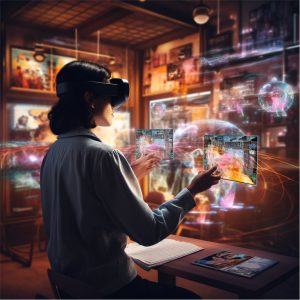

XR is an essential business tool. Its adoption spreads widely among many different realms, setting itself as one of the main instruments that companies can adopt to stay ahead of competitors.
What once lived in gaming labs now drives training, retail, healthcare, and everyday business operations. As immersive technologies mature, companies are moving from testing ideas to scaling real impact through the most advanced technologies currently available.
From AI-enhanced workflows to spatial computing, at YORD, we are helping shape the whole phenomenon. Working with clients across the world, we co-create immersive solutions that are both visionary and useful. Here are the XR trends we see defining the year ahead. In the next sections, we want to introduce you to some of the most interesting trends in the XR field, looking forward to 2026.
The State of XR in 2026
Looking back at the year going by, it’s safe to say that XR has reached a critical threshold:
1. Spatial Computing Accelerated by Apple Vision Pro
- Apple Vision Pro adoption pushed spatial computing into everyday workflows.
- Enterprises use it for productivity, collaboration, and interactive visualization.
- Consumers increasingly rely on it for immersive entertainment.
IDC projects that Vision Pro and competing devices could drive XR hardware shipments to 40M+ units per year by 2026.
2. AR Became a Proven Channel for Retail and Marketing
- AR try-ons, product previews, and immersive brand activations show high conversion potential.
- Brands use AR to reduce purchase friction and deliver personalized shopping experiences.
Snap Inc. reports that AR try-ons can increase buying confidence by up to 80% and significantly reduce returns.
3. Enterprise XR Adoption Continued to Rise
- Companies across industries treat XR as a standard tool for training, design, and operations.
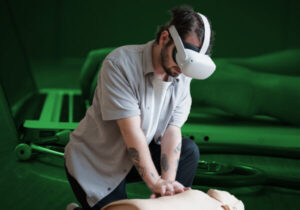
- VR-based learning delivers faster skill acquisition and better retention compared to traditional methods.
PwC findings show that VR training improves employee learning speed and overall training effectiveness.
The Main XR Trends to Watch in 2026
1. 📈XR Becomes Mainstream in Work & Collaboration
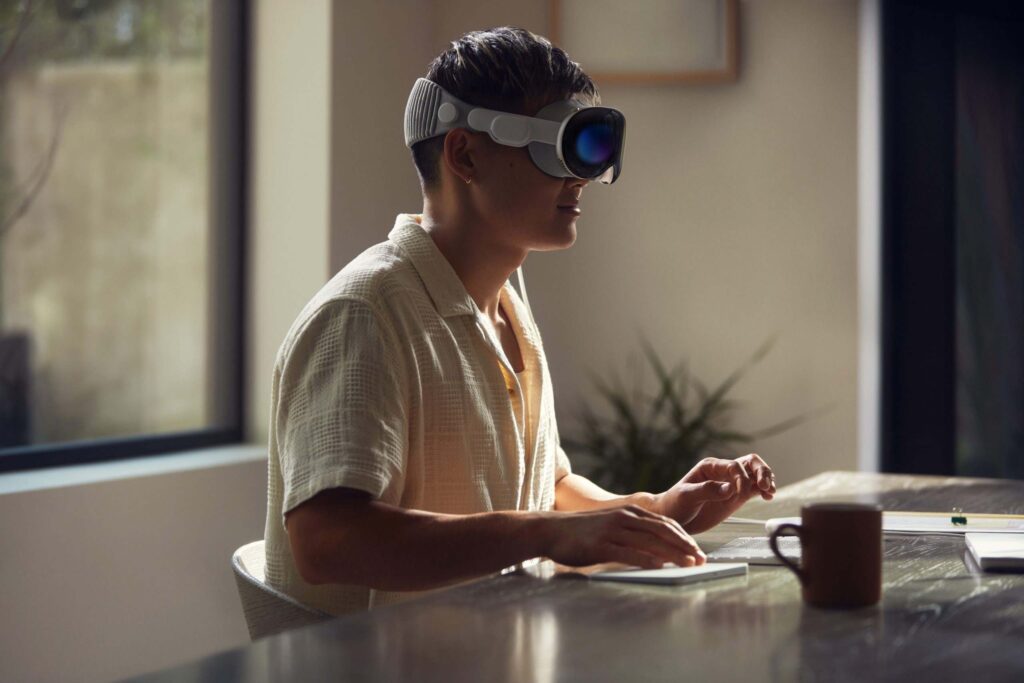
Remote work and hybrid collaboration have established XR as a necessity rather than an experiment. Platforms like Microsoft Mesh and Meta Horizon Workrooms now provide scalable frameworks for immersive collaboration. But many businesses are investing in custom XR workspaces tailored to their brand culture and workflows.
Employees report higher engagement and improved collaboration in immersive environments compared to 2D video conferencing. Training modules in VR, for example, allow complex skills to be practiced safely and memorably. For industries such as manufacturing and aviation, XR reduces errors, increases safety, and cuts costs.
2.🏙️ Hyper-Realistic Experiences
Hyper-realism is redefining XR in 2026. With advances in rendering, motion capture, and volumetric video, experiences are nearly indistinguishable from real life. Brands and institutions are increasingly investing in photorealistic avatars and environments. In luxury retail, realism enhances emotional connection; customers can virtually explore high-end products in detail before purchasing. In real estate, clients can step into digital replicas of properties and visualize spaces with full fidelity, reducing sales cycles. In healthcare, lifelike simulations improve both diagnosis and training outcomes.
3. 🤖AI Integration for Intelligent Immersive Experiences

Artificial intelligence is the backbone of next-generation XR. By powering adaptive, interactive, and responsive environments, AI makes XR experiences truly personal and scalable, as we have already seen through some noble examples coming straight from 2025:
- AI avatars and Metahumans can conduct natural conversations, acting as trainers, guides, or brand representatives.
- Procedural environments shift dynamically to user input, creating limitless worlds for exploration or learning.
- Adaptive learning uses AI to personalize training, accelerating progress for advanced learners while supporting those who need more guidance.
Generally speaking, AI in XR increases accessibility and ROI. It allows businesses to train thousands of employees with personalized experiences, or brands to offer 24/7 immersive customer service through digital representatives.
4. 📱Social Shareability for AR/VR Experiences

Immersive content will no longer be exclusive to expensive headsets and specialized hardware. In 2026, VR platforms will allow a much more shareable and accessible type of experience for users, increasing the potential of these solutions for digital storytelling and marketing purposes.
5. 🏥Telemedicine and UGC in Healthcare
Healthcare is one of the fastest-growing areas for XR. Telemedicine now includes immersive consultations, where doctors and patients share virtual environments for better communication. Meanwhile, patients themselves generate health-related data in XR platforms, enabling more precise diagnoses. Deloitte already highlighted the advantages of virtual therapies for mental health practitioners in 2023. Moreover, in later times, XR found a space also for rehabilitation and physiotherapy by gamifying exercises and enabling real-time monitoring.
6.🎬 XR for Film and Entertainment
The movie industry might rapidly adopt XR to enhance storytelling. Beyond production, these technologies can improve the whole experience for viewers. From virtual premieres to immersive cinema screenings and AR campaigns. XR will allow audiences to empathize with films in entirely new ways. At the same time, entertainment giants will have the possibility to partner with major tech providers to discover new frontiers of engagement.
7. 🔐More Comfort and Security in the UX
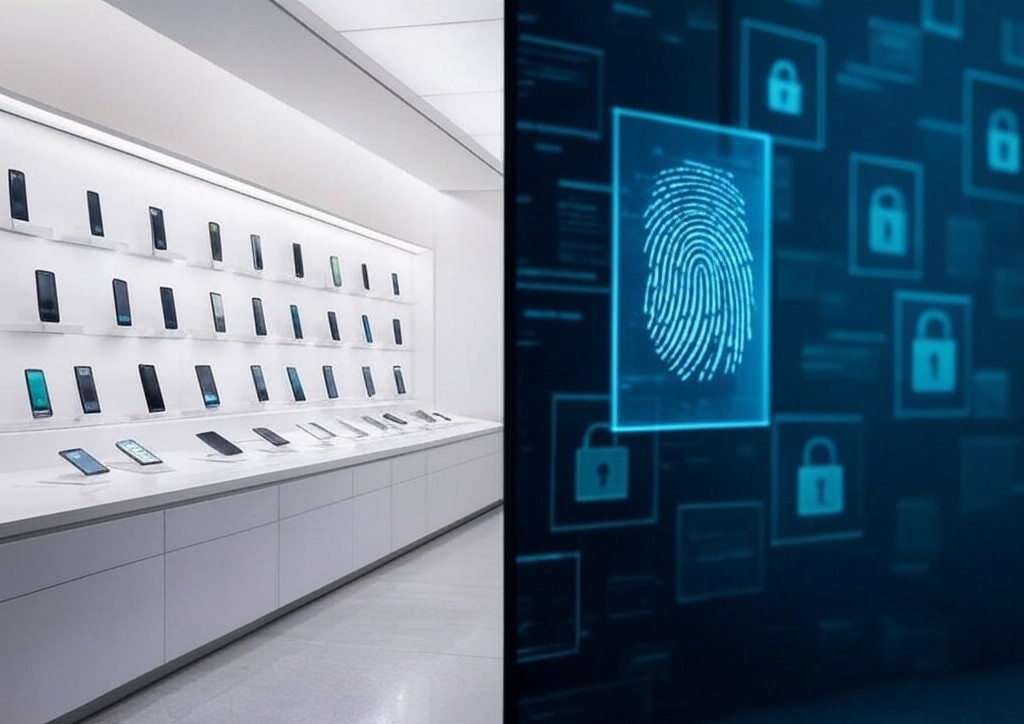
Adoption depends on usability. In 2026, hardware will be lighter, ergonomically designed, and built for long-term comfort. Meanwhile, security and privacy standards are becoming stricter as XR collects sensitive biometric and behavioral data. These advancements will make XR accessible to broader audiences, including schools and healthcare providers, while reassuring enterprises about data protection.
8.🚀 Growth in XR Software Ecosystems
Software ecosystems are expanding rapidly. With open SDKs, low-code platforms, and modular XR tools, businesses can deploy immersive experiences without having to reinvent the wheel. Companies that once hesitated due to high entry costs can now launch XR solutions faster, accelerating experimentation and scaling while partnering with industry leaders like YORD.
9.🛍️ Advanced Mixed Reality
In 2026, Mixed Reality will aid in the advancement of existing technologies and solutions, such as interactive walls and avatars. By enhancing such options, businesses will be able to enrich the customer experience, thanks to in-store virtual try-ons, gamified experiences, and AR shopping assistants, turning static interactions into dynamic, interactive encounters.
10. 🕶️Hardware and Infrastructure Innovations
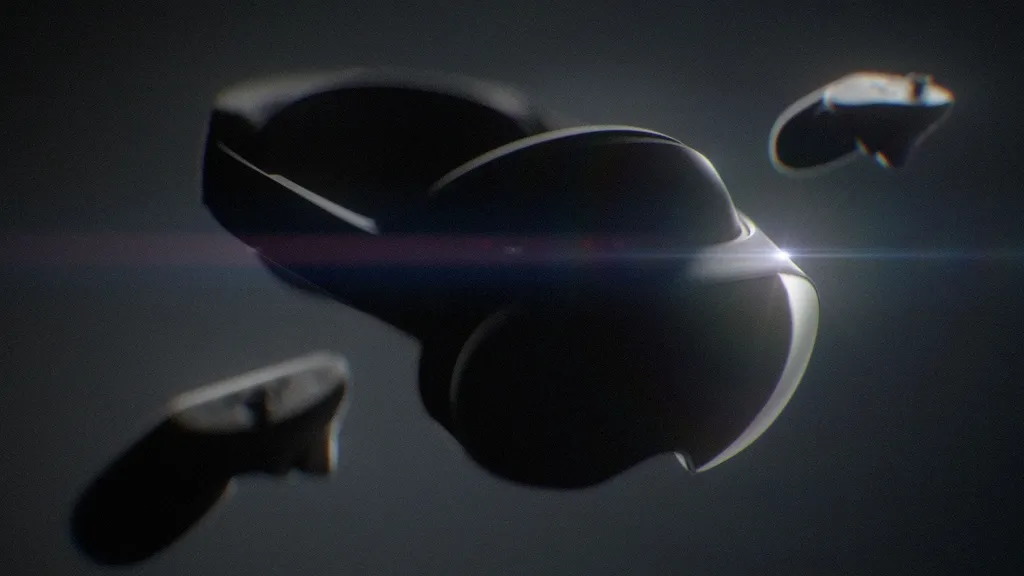
Hardware innovation will continue at the same pace as software advancement:
- Standalone headsets that achieve desktop-level performance.
- XR wearables will become lighter, more fashionable, and widely accessible.
- Haptic devices and full-body tracking will bring physicality into virtual worlds.
- 5G/6G networks will ensure smooth streaming and low-latency interaction.
Each development mentioned here aims to lower adoption barriers. By 2026, immersive devices are expected to be as commonplace in homes and offices as smartphones are today.
Challenges and Opportunities for Business XR in 2026
As XR grows, several challenges require attention, especially when it comes to business applications:
- Interoperability: With multiple competing platforms, seamless content portability remains elusive. Industry-wide standards are critical.
- Privacy & Ethics: XR collects biometric and behavioral data, raising new questions about ownership and consent. Regulators and enterprises alike must act responsibly.
- Accessibility: To fulfill XR’s promise, solutions must be inclusive—designed for diverse abilities, affordable, and available beyond tech-centric regions.
Addressing them, however, will give businesses access to unprecedented opportunities, such as quick wins over competitors and much more strategic appeal. Specifically, XR integration into determined industries and workflows can guarantee:
- Retail: AR try-ons and pop-up XR stores enhance customer experience.
- Education: VR classrooms provide adaptive, gamified learning environments.
- Healthcare: XR enhances telemedicine, medical training, and therapy.
- Manufacturing: Digital twins and immersive training reduce risks and costs.
- Luxury: Exclusive XR brand worlds create new forms of storytelling and customer loyalty.
YORD’s Services Driving XR Innovation in 2026
Overcoming the challenges of XR to achieve the best results requires the support of experts. YORD stands at the intersection of creativity, technology, and strategy, delivering XR solutions that anticipate and shape industry trends. As immersive technologies evolve, our services evolve with them, helping businesses implement meaningful, high-impact XR solutions such as:
- Virtual Reality Development for training, marketing, and storytelling. From enterprise simulations to VR brand activations, our solutions merge creativity with measurable business outcomes.
- AR Experiences that Bridge Digital and Physical Spaces. Whether through mobile AR filters, location-based activations, or AR retail experiences, we help brands reach audiences in real-world contexts.
- AI-integrated XR solutions, such as Metahuman avatars, adaptive assistants, and data-driven simulations, help clients deliver personalized and scalable immersive experiences.
- Immersive installations and interactive events, such as AI photo booths and XR festival zones, engage visitors and generate leads, merging artistry with analytics.
Step Into 2026 with YORD’s XR for Business Solutions
2026 is the year XR transitions into the mainstream. With AI integration, hyper-realistic experiences, enhanced MR, and growing adoption across industries, immersive technologies are shaping how we live, learn, and work.
For businesses, the question is no longer if but when. Early adopters are already enjoying the benefits: improved customer engagement, reduced costs, and more substantial brand presence. Those who delay risk falling behind.
At YORD, we believe XR is not just about technology: it is about transforming human experience. The future is immersive, and it starts now.
Discover how YORD implements these XR trends for global leaders — explore our projects.