
AI for employee training is revolutionising corporate learning and development across industries. As businesses navigate rapid digital transformation, automation, and evolving skill demands, continuous workforce upskilling is no longer optional: it’s a competitive imperative. Organisations are increasingly adopting AI-powered training platforms, adaptive learning systems, and data-driven performance evaluation tools to stay ahead in dynamic markets.
While digital learning revolutionized professional education, AI is now redefining it. Through personalized learning paths, predictive analytics, intelligent content delivery, and immersive simulations, AI-driven training solutions enhance engagement, accelerate skill acquisition, and improve measurable outcomes. By combining automation with real-time data insights, Artificial Intelligence is enabling companies to build agile, future-ready teams faster and more efficiently than ever before.
AI Solutions To Overcome Traditional Training Limitations
Nowadays, traditional training methods often struggle to keep up with the specific and fast-paced needs of the modern workforce. Outdated learning solutions, generic workshops, and didactic sessions might not adapt well to individual learning styles, leaving employees disengaged and underprepared. Furthermore, such approaches might not suit everyone’s time management needs, making attendance at training events difficult or fragmentary.
AI in training makes it more innovative and personalized without requiring further resources or energy. Advanced artificial intelligence development services enable companies to integrate machine learning, computer vision, and generative models into their training programs. AI-powered learning platforms analyze and evaluate each employee’s progress and automatically adjust the content to match their learning speed while focusing on areas where they need the most help.
Moreover, virtual interactions can make training more stimulating, offering hands-on practice in realistic scenarios without any risks or concerns. AI presents accurate reports and outcomes from the training sessions, making focusing on growth and strategy in the aftermath easier. Generally speaking, AI learning tools make the process much more effective and enjoyable for everyone.
The Best AI Tools for Employee Training
As we previously mentioned, AI training platforms are reshaping professional learning by introducing innovative tools and approaches capable of addressing the shortcomings of traditional methods. Not only does AI enhance the learning experience for employees, but it also delivers training at scale with precision and efficiency with innovative approaches like:
1. AI Solutions for Personalised Corporate Training
One of AI training tools’ most impactful contributions is their ability to develop tailored learning experiences. Unlike traditional programs that offer the same materials to everyone, AI-powered platforms adapt to individual learning styles, strengths, and weaknesses. They use real-time data to assess an employee’s progress and adjust the content to handle more challenging topics. This approach keeps professionals engaged and accelerates skill acquisition.
2. Immersive Training through AI-Driven Simulations
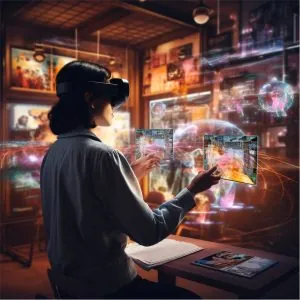
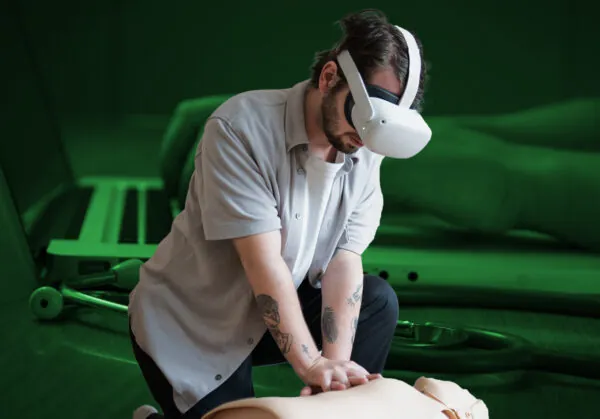
AI-powered learning and development tools implemented with AR and VR profoundly changed how employees acquire hands-on skills. These immersive solutions create realistic environments where users can practice complex tasks without risks. AI enhances simulations by providing instant feedback and performance analysis, adjusting scenarios to match the learner’s proficiency level, and building confidence while preparing employees correctly for high-stakes situations.
3. Real-time Feedback For Evaluation
AI training software enables real-time feedback, allowing employees to adjust their experience while learning. These coaching tools analyse professionals’ skills individually, providing actionable insights for improvement. This immediate feedback loop accelerates learning by helping employees correct mistakes and refine their skills.
Pros and Cons of AI for Training and Evaluation
AI for corporate training and development offers several advancements. Still, it comes with challenges that organisations must be aware of. By understanding the pros and cons of these solutions, businesses can make informed decisions about their adoption and rely on the help of experts for their enhanced professional training.
Pros of AI in Training and Evaluation
- Personalised learning at scale: AI for training enables tailored learning experiences and analyses individual performance to adapt content to specific needs. Thanks to adaptive platforms that develop courses at varying levels of proficiency, employees can receive focused support.
- Bias reduction in the evaluation phase: thanks to data-driven algorithms, AI minimises the risk of human biases in performance reviews, delivering objective reports based on measurable metrics for greater transparency and fairness.
- Cost-effectiveness: AI learning tools reduce the need for physical materials, trainers, and extensive time investments, allowing businesses to scale training efforts across large workforces and professionals to access online modules anytime.
- Immersive and engaging experiences: AI-integrated AR/VR Tools create realistic simulations for hands-on practice. Such experiences are particularly valuable in many industries where real-world training can be expensive or risky.
Cons of AI in Training and Evaluation
- Ethical concerns: AI-powered learning platforms rely heavily on collecting and analysing employee data, raising concerns about privacy and ethical use. Companies need the help of professionals to implement robust security measures to protect such information and correctly manage it to incorporate high-quality data in their algorithms to avoid biases.
- Dependency on Data Quality: As previously mentioned, algorithms need data to work correctly. Poorly developed solutions might undermine the reliability of the training experience or the evaluation outcomes.
Successful Use Cases and Applications
Industries are increasingly adopting AI-driven technologies, not only for training purposes. The potential for innovation in this particular field, however, is immense, as witnessed by some of the emerging related trends in specific sectors like:
- 🩺 Healthcare training: AI learning tools allow professionals and students to have hands-on experiences in safe environments while getting more in touch with their roles and how to accomplish their tasks better. AI in the healthcare industry is being used profusely to analyze patient records and get accurate reports to define treatments and their effectiveness, and to optimize the training processes.
- 📈 Finance: In the financial field, such instruments offer a better insight into the financial markets without facing the risks of unconscious investments. Furthermore, they streamline analytics and help professionals and institutions assess risks accurately.
- ⚙️ Manufacturing and engineering: AI tools for professional training provide engaging experiences to practice different operations without risk concerns. These instruments offer training in equipment operation, maintenance, and safety protocols.
- 🚀 Aviation and aerospace: Pilots and crew members are often trained using AI-powered simulators, replicating real-world conditions like turbulence, mechanical failures, or emergency scenarios to better understand what to do in such scenarios while receiving real-time performance analysis.
The Future of Corporate Training with AI
Further perspectives on learning and development offer bright scenarios, with endless possibilities for developing more innovative, engaging, and inclusive learning environments. By embracing these emerging technologies, organizations can foster a culture of continuous growth, empowering their workforce and helping them address the challenges and opportunities of today’s dynamic markets.
Many organizations adopt custom AI development services when off-the-shelf AI tools cannot address their operational needs. However, the implementation of ethical solutions, robust data security, and the right balance between technology and human collection requires the support of experts to transform professional upskilling from its fundamentals.
Develop AI-powered Professional Training Tools
AI learning tools transform how businesses train and evaluate their teams, making such operations faster, smarter, and more effective than in the past. From creating immersive simulations to delivering real-time feedback and personalized learning paths, these tools are helping organizations upskill their teams and gain competitiveness in their field.
By relying on our help, you’ll be able to combine the latest technologies provided by AI with immersive technologies like AR and VR while addressing the ethical challenges concerning these solutions. Our experience in building intelligent AI training systems spans interactive scenarios, realistic environments, and behavioral logic using AI-powered engines.
Partnering with YORD will give you access to innovative instruments that train smarter, provide engaging and immersive experiences, and offer measurable growth and accurate reports. Contact us to discover all the advantages of our services for AI training and Evaluation.
FAQ
1. How does artificial intelligence improve employee training?
Artificial intelligence improves employee training by using data analytics, machine learning, and adaptive learning systems to deliver personalized content based on individual performance and skill gaps. AI-powered platforms provide real-time feedback, automate assessments, and optimise learning paths, resulting in faster skill development, higher engagement, and measurable training ROI.
2. How does AI personalise corporate training?
AI personalizes corporate training by analyzing employee behavior, job roles, past performance, and competency levels to create customized learning journeys. Through intelligent learning management systems (LMS) and predictive analytics, AI delivers targeted modules, micro-learning content, and adaptive assessments that align with specific professional development goals.
3. What are the benefits of AI-powered workforce upskilling programs?
AI-powered workforce upskilling programs improve scalability, reduce training costs, and increase knowledge retention. By automating content delivery and performance tracking, businesses can efficiently reskill and upskill employees while ensuring training aligns with evolving industry demands and digital transformation strategies.
4. Can AI reduce bias in employee performance evaluation?
Yes, AI-driven performance evaluation tools reduce bias by relying on objective, data-based metrics rather than subjective judgment. Advanced algorithms analyse measurable KPIs, productivity data, and competency benchmarks to generate transparent and fair performance assessments.
5. Is AI-based corporate training cost-effective for large organisations?
AI-based corporate training is highly cost-effective because it minimizes the need for in-person trainers, printed materials, and manual evaluation processes. Cloud-based AI learning platforms enable companies to scale training across global teams while optimising time, resources, and overall learning efficiency.