

The digital realm is swifty, transcending beyond mere flat screens. As we step into the metaverse—an expansive interconnected digital universe—brands are presented with revolutionary ways to redefine their rapport with consumers. The integration of Metaverse avatars and the avant-garde Metahuman Unreal Engine ushers brands into this immersive era.
What is a Metahuman?
A Metahuman is a hyper-realistic digital representation of a human. These digital entities are designed to perfectly mimic human emotions, actions, and intricacies. Watch this video showcasing how a Metahuman could manifest to grasp the potential and reality.
Metahuman Definition
The term “metahuman” refers to a digitally created representation of a human, crafted using the most advanced technologies available. These digital entities are meticulously designed to capture even the subtlest nuances of human expression and emotion, making them almost indistinguishable from real humans in a virtual environment. The metahuman definition extends beyond just a simple digital avatar; it represents a convergence of technology and artistry, aiming to revolutionize how we perceive and interact with virtual representations. As technology evolves, the line between humans and metahumans in the digital realm may become increasingly blurred, offering new possibilities for interaction, entertainment, and business.
What’s the difference between Metaverse Avatars and Metahumans?
CriteriaMetaverse AvatarsMetahumansPros RealismVaries; can be stylized or semi-realisticExtremely high; almost indistinguishable from real humansCustomizationHigh; can be easily tailored to represent various styles and identitiesLimited to human-like features but can capture detailed nuancesApplication RangeBroad; suitable for virtual worlds, social platforms, and online gamesSpecific: ideal for film, advertising, simulations, and high-end gamingResource IntensityGenerally lower; simpler designs require less computational powerHigher, detailed designs demand more computational resourcesEngagementAllows for unique and diverse representations, which can be more engaging in casual settingsLifelike representation can lead to deeper emotional connectionsCons RealismMight not capture the full depth of human emotion and expressionMight be too realistic for some applications, leading to uncanny valley concernsCustomizationIt might lack the depth and nuance of human-like features in some platformsLess room for stylized or fantastical customizationApplication RangeIt might not be suitable for applications requiring high realismIt might be overkill for casual or stylized platformsResource IntensitySome advanced avatars might still require significant resourcesRequires high-end technology and can be resource-intensiveEngagementStylized avatars might not resonate with all demographicsThe high realism might not always be necessary or could be off-putting to some users
Businesses can use this table as a starting point to evaluate which option aligns better with their specific needs and target audience.
How Can Metahuman And Metaverse Avatars Be Used For Business Solutions?
Virtual Influencers
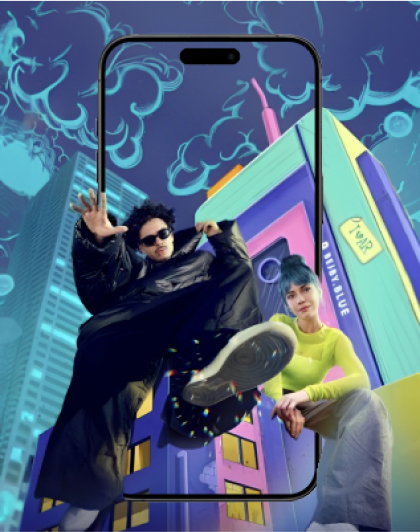
In the realm of influencer marketing, virtual influencers stand out as a unique proposition. These CGI-created characters, tailored to resonate with specific audience segments, offer a consistent and controlled brand representation. Unlike their human counterparts, they can be designed to perfectly align with a brand’s image or message, making them a valuable asset in the world of influence marketing.
Conversational Avatars
Enhancing user experience is paramount in today’s competitive market. With the integration of Natural Language Processing (NLP), conversational avatars can be the game-changer. They not only enhance chatbot solutions but also elevate mobile app onboarding experiences, ensuring users are engaged and informed.

Live-size Holograms
Imagine walking into a business meeting and being greeted by a life-size hologram of the CEO. These metaverse avatars can be used to interact with the public or to add a futuristic touch to video conferencing meetings, offering a unique and immersive experience.

Talking Heads
Trade shows, retail stores, and even gyms are now offering a novel interaction method with Talking Heads. These digital characters, animated in real-time using facial recognition and motion capture, provide guests with an informative and memorable experience. It’s like having a metahuman representative, ready to engage and inform.

Character Design and Animation
The art of creating virtual humans has evolved immensely. Whether the need is for photorealistic, cartoony, or any other stylistic representation, businesses can now have characters that align perfectly with their brand ethos and message.
Witnessing Metahuman Brilliance: A Case Study
Delve into our project where we synergized with a client to sculpt a hyper-realistic Metahuman Twin. This case underscores the depth, precision, and boundless possibilities when blending Metahumans into brand strategies. For a comprehensive view of our expertise, also traverse through our diverse AR, VR, and XR projects.

Conclusion
In an age where reality and digital often blur, brands harnessing the might of the Metahuman Unreal Engine and well-crafted Metaverse avatars are poised for unprecedented engagement. The metaverse beckons brands to limitless connectivity, immersion, and growth.