
VR & AR Solutions
for the Real-Estate & Architecture Industry
Virtual and augmented reality could enhance the whole working process for real estate and architecture.experiences with innovative technology.
What is VR for real estate?
VR in real estate refers to the use of immersive 3D technology that allows users to explore, design, or experience a property virtually. It combines virtual reality, augmented reality, and spatial computing to simulate real-world environments in high detail.
Through VR real estate software, developers, architects, and agents can showcase projects remotely, provide interactive tours, and even visualize design changes in real time. This innovation bridges the gap between imagination and execution, offering a new level of realism, engagement, and efficiency across the property market.
Our ar/vr
Solutions for real estate
1. Design Visualization
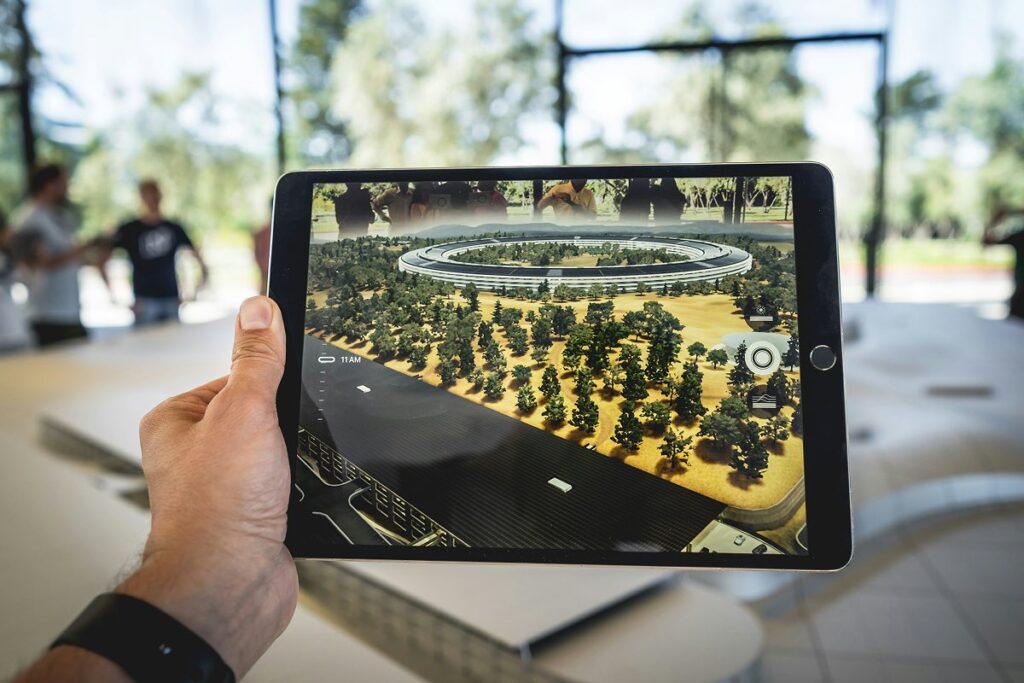
Virtual and augmented reality can create realistic 3D models of building designs, allowing architects to visualize and present their plans to clients in a much more immersive and engaging way. This feature allows for better feedback and understanding of the design before construction.
2. Training in VR
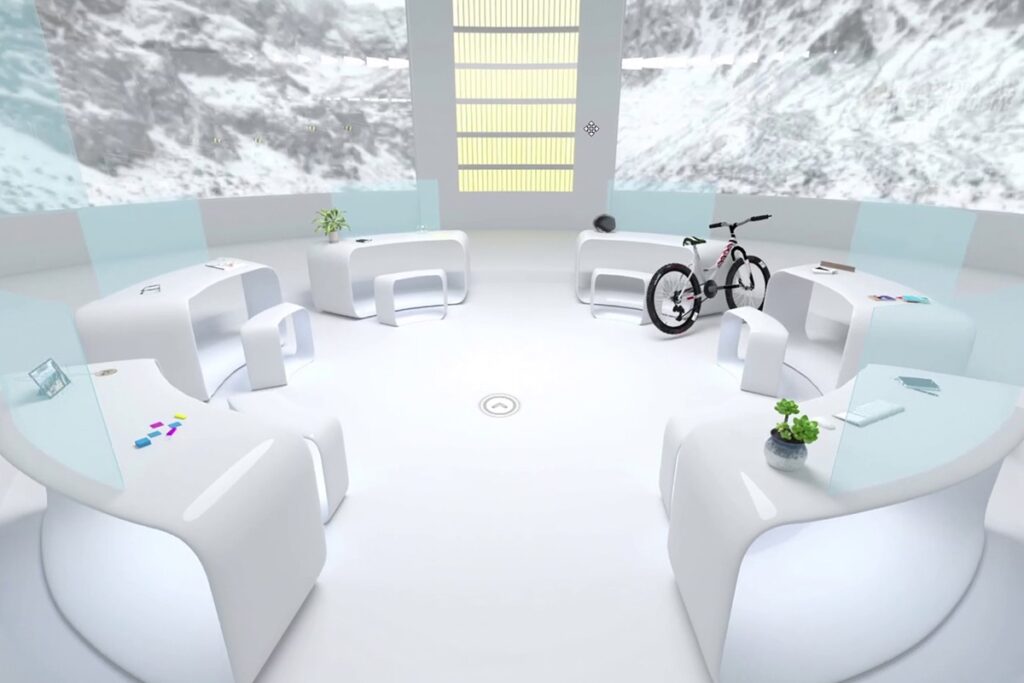
Using virtual reality in education and training can enable architects and other AEC professionals to visualize and interact with designs in a realistic and immersive way. This tool allows them to make more informed decisions and better understand the implications of their design choices. It also enables the users to understand a space’s functionality and usability before it is constructed.
3. Virtual tours
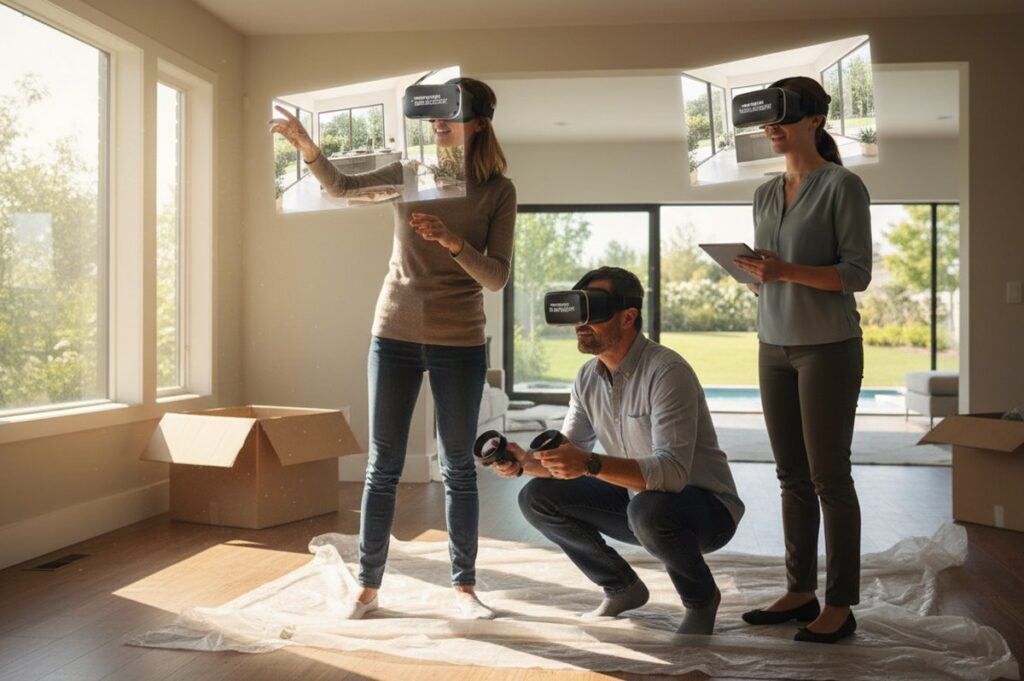
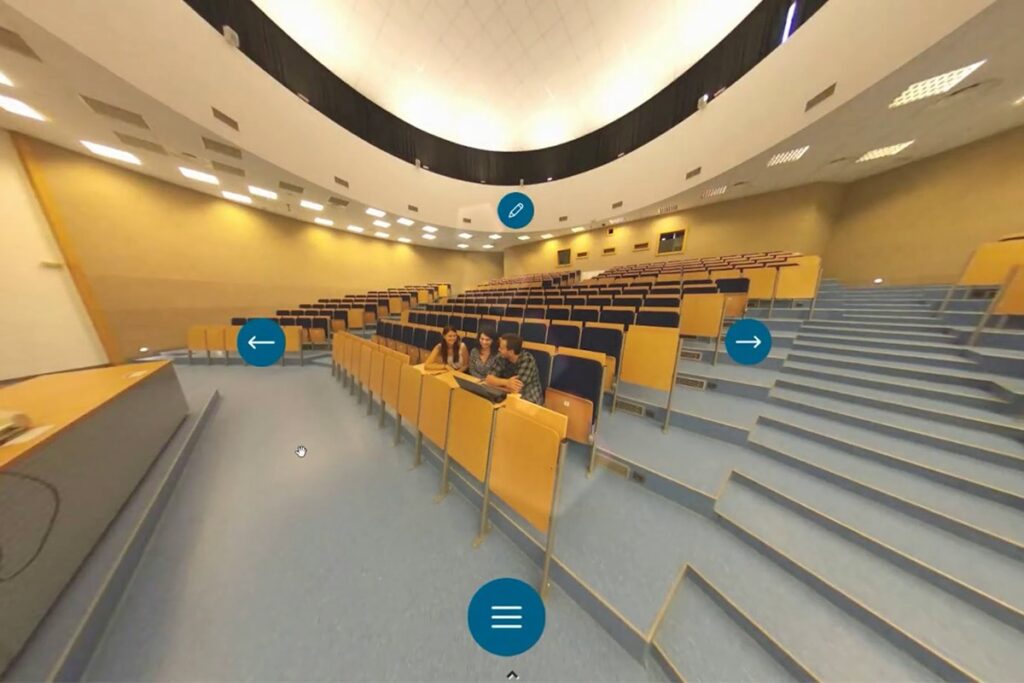
Virtual tours allow potential buyers to explore a property in detail using VR technology. These tours could include 360-degree views, interactive elements (such as opening or closing the doors, switching the lights on and off, etc.), floor plans, and HD images and videos.
4. Property staging with AR
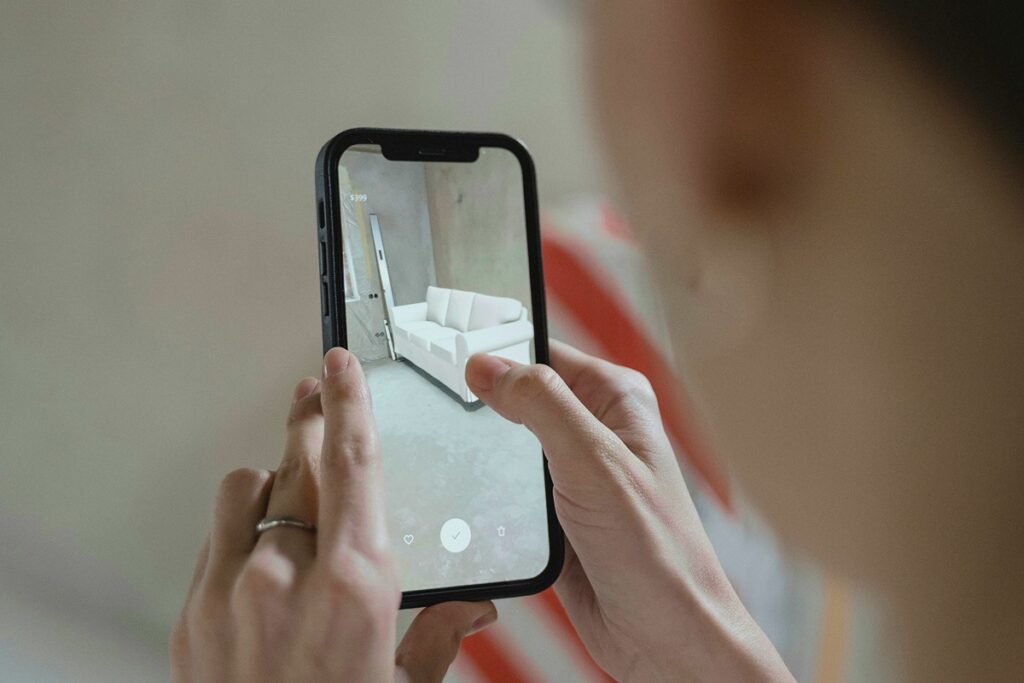
Augmented reality can create virtual versions of furniture and decor that can be placed inside a property to give potential buyers an idea of how the space could look when furnished. It’s proven that customers who use augmented reality to visualize furniture before buying are three times more likely to purchase the product.
5. Interior Design and Spatial Computing Innovation
Virtual and augmented reality allow interior designers to eliminate the constraints they face in the real world. AR-based tools can turn a complex design mockup into a prototype in a few minutes, regardless of complexity or scale. VR-based tools allow designers to interact with and manipulate prototypes in infinite ways.
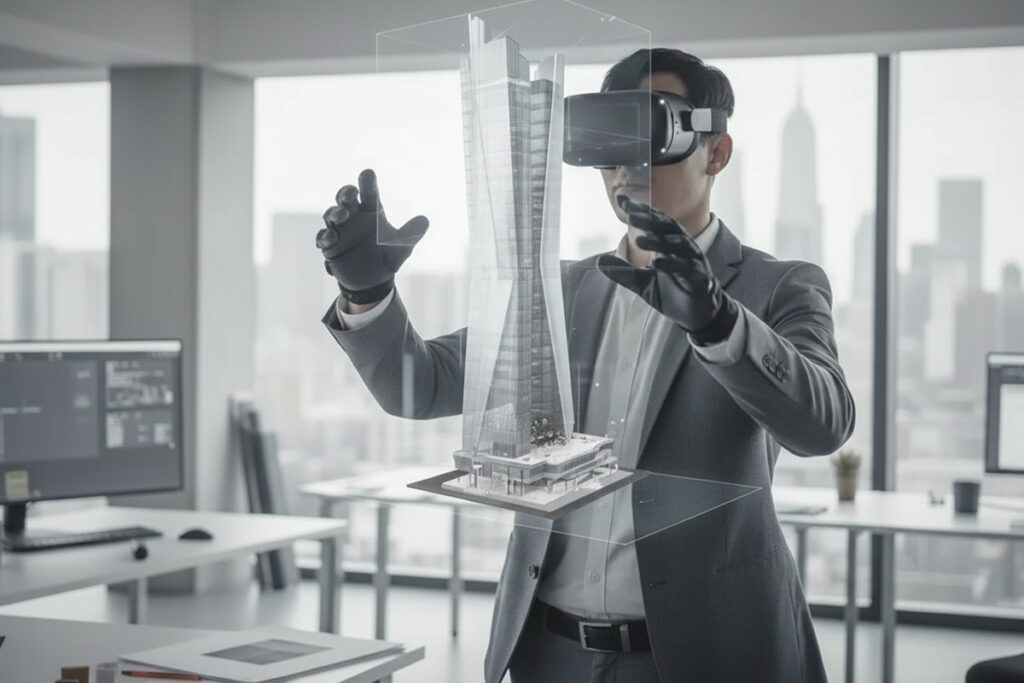
6. Locating properties with AR
An AR-based app can assist customers interested in purchasing properties by scanning nearby commercial properties. They can also view the building’s available offices, amenities, and tenants. These apps can also include a design visualization system and communication interface with marketing agents during construction.
EXAMPLES OF AR/VR FOR REAL ESTATE
“We work in the fields of UI/UX design, interiors, photography and art direction. ”
the benefits of ar/vr
for real estate
Enhanced Visualization
AR/VR in real estate empowers architects and designers to create hyper-realistic 3D models of buildings and interiors. Using VR real estate software, clients can “walk” through a virtual version of a future property, review materials, and give immediate feedback. This minimizes errors, shortens approval cycles, and improves collaboration throughout the design process.
Smarter Training and Decision-Making
Training in VR for real estate enables architects and AEC professionals to visualize and interact with their designs safely in a virtual environment. This immersive method improves understanding of spatial relationships, usability, and design implications before construction begins, one of the core benefits of VR in real estate development and education.
Emotional storytelling through space
Every property has a story, and immersive technology lets audiences feel it.
From cinematic VR tours to interactive AR presentations, architecture becomes a narrative that engages the senses and inspires investment.
It’s not just visualization. It’s persuasion powered by emotion and innovation.
Sustainability through simulation
Virtual prototyping reduces the environmental cost of physical models and travel.
Design teams can simulate sunlight, airflow, or energy performance before construction begins, achieving aesthetic excellence and environmental responsibility in one process.
Interior Innovation
With spatial computing and Apple Vision Pro real estate applications, interior designers and developers can experiment with lighting, textures, and layouts in real time. These VR real estate showcases allow users to manipulate virtual prototypes, test creative ideas instantly, and share designs with clients anywhere, pushing the boundaries of design freedom and interactivity.
Optimised customer experience
AR/VR in real estate enhances how buyers locate and evaluate properties. AR-based mobile apps can scan nearby buildings and display real-time data such as available units, amenities, and pricing. Integrated VR real estate experiences allow clients to virtually enter and explore properties before ever visiting in person, combining convenience, immersion, and insight in one seamless process.
Frequently asked questions
How We Help You Transform Your Real Estate Business
1.What is VR in real estate?
VR in real estate refers to immersive technologies, such as virtual walkthroughs or 360° tours, that allow potential buyers, investors or stakeholders to explore a property virtually rather than only through photos or videos. Unlike a typical listing, a VR real estate tour gives a sense of spatial layout, scale and flow as if you were physically present. This makes it possible to visualise developments, off-plan units or architecture ahead of construction.
At YORD we help embed VR real estate tours, AR/VR in real estate showcases and interactive walkthroughs into your architecture and property-marketing strategy.
2.What are the key benefits of VR for real estate agents, developers and buyers?
Time and cost savings: Virtual tours mean fewer showings, less travel, fewer physical setups.
Wider reach and global access: Buyers and investors can inspect properties from anywhere, including remote or off-plan units.
Enhanced engagement and decision-making: Listings with immersive walkthroughs generate higher interest and often faster sales.
These advantages make VR real estate software strategic tools for competitive differentiation.
3.How are AR and VR used together in real estate?
AR and VR together create a layered experience:
VR provides full immersive walkthroughs of properties: interiors, exteriors, off-plan and under-construction assets.
AR overlays allow buyers or architects to visualise additional details (furnishings, finishes, spatial modifications) on top of current physical space.
By combining AR/VR, real estate companies can deliver VR real estate experiences that let users personalise finishes, stage virtually, or compare layouts, enhancing both marketing and design engagement.
4.What should a real estate company look for when selecting a VR Services Provider?
Quality of visual realism and spatial fidelity (accurate dimensions, lighting, textures), essential for architecture and off-plan units.
Ease of access and device compatibility (headsets, web/desktop, mobile).
Interactive features: ability to change finishes, layout, furnishings; live guided tours.
Integration into the sales and marketing workflow: embedding in websites, CRM, property portals; tracking engagement metrics.
Scalability and future-proofing: for example readiness for spatial computing platforms (such as AR/VR Apple Vision Pro real estate applications) and metaverse-style experiences.
YORD supports full-cycle design, development and deployment of immersive real-estate platforms that deliver measurable results.
Are there any real-world examples of effective AR/VR use for real estate?
Yes, the technology is already moving into mainstream real estate:
Developers using VR for off-plan property sales: buyers can tour units before construction and customise finishes, thus shortening sales cycles.
Architecture teams using VR/AR to visualise buildings before completion, helping stakeholders and clients make decisions earlier and reducing costly redesigns.
Luxury listings offering VR real estate walkthroughs to international buyers, increasing reach and engagement.
These use-cases illustrate how VR real estate companies and architecture firms can gain strategic advantage through immersive experiences.
Got a vr idea? Make it reality.
Simply send us a message through a form or call us directly if you prefer. We will get back to you within 24 hours.
By clicking the "send" button, I agree with collecting and processing my personal data as described in the Privacy Policy.