
AI and XR Military Training
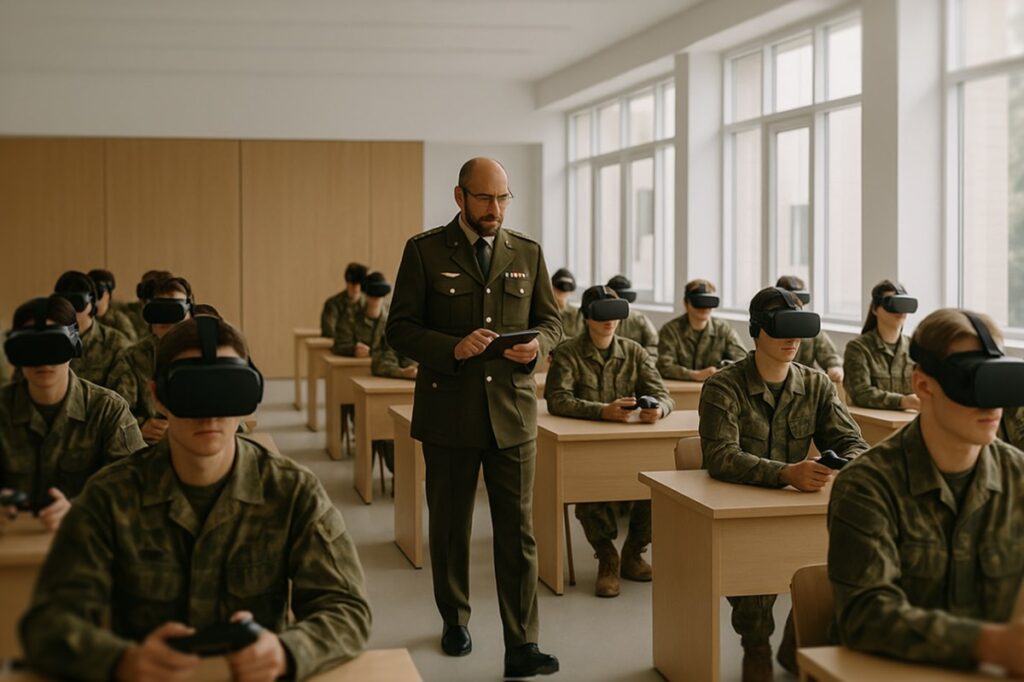
Extended Reality and Artificial Intelligence enhancing training programs for military training purposes.
What is AI + XR Military Training?
AI-driven simulations respond dynamically to each soldier’s actions, creating personalized learning environments that mirror the unpredictability of real combat. Combined with XR immersion, this approach sharpens tactical awareness, accelerates decision-making, and reduces the cost and risk of traditional field exercises.
The impact speaks for itself:
- 81% of soldiers report higher confidence after XR-based training
- 75% of military units plan to integrate XR by 2028
- 77% of trainees say it delivers a more realistic understanding of battlefield conditions
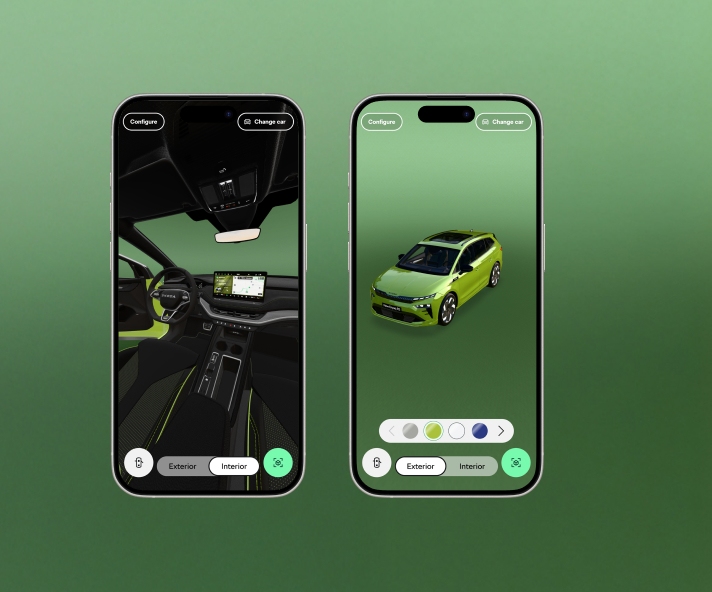
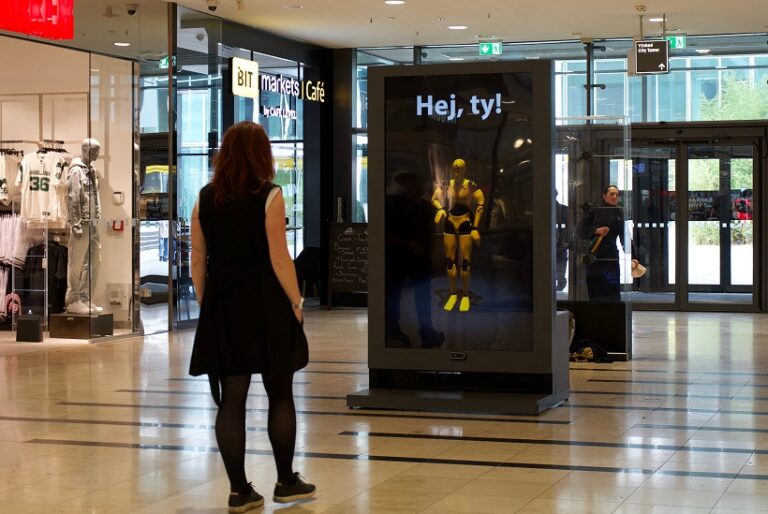
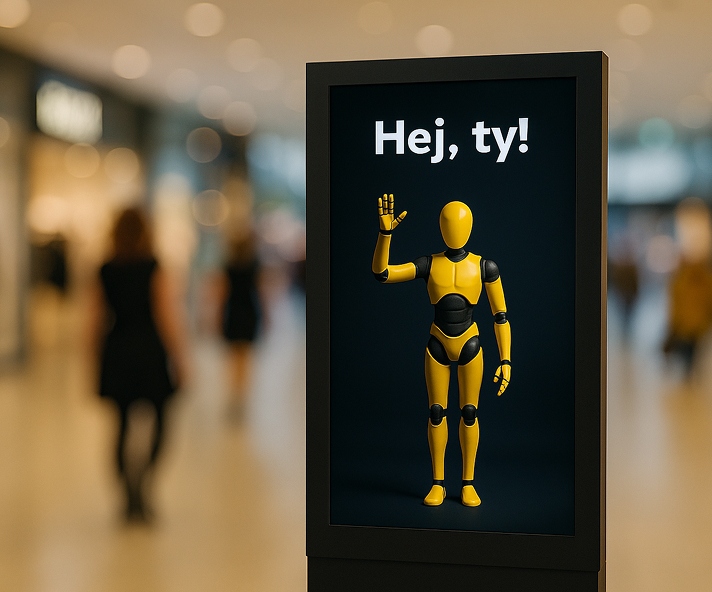
Our vr military training Solutions for the defence industry
1. Close-quarters battle simulations
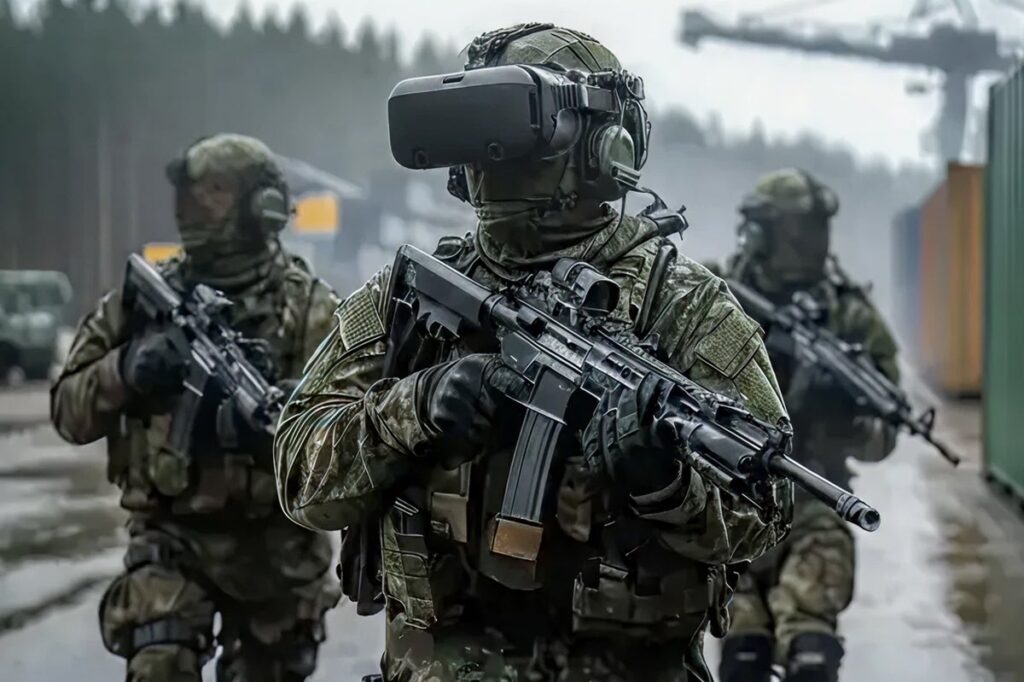
Trainees enter immersive VR environments that replicate confined spaces like buildings, tunnels, or ship interiors. These simulations help soldiers practice high-pressure operations ina safe yet realistic seting. Moreover, AI provides dynamic enemy forces to develop adaptive thinking and quick reaction under fire.
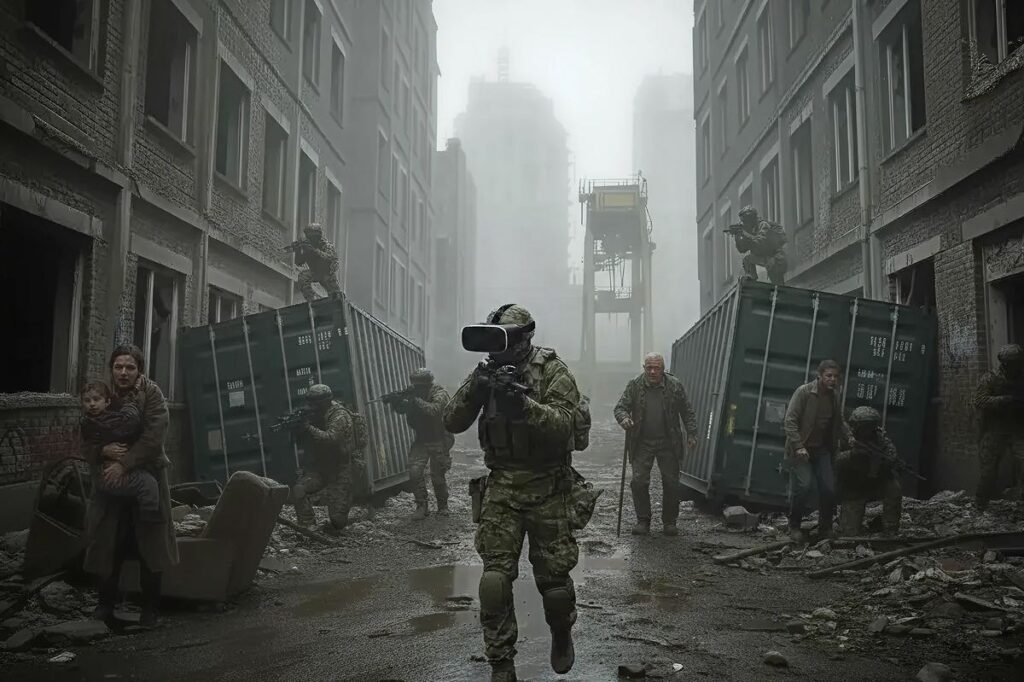
2. Urban Warfare Scenarios
VR simulate dense, populated areas with variable civilian presence, multiple vantage points, and threats from different directions. These scenarios help soldiers refine tactical movement, rules of enagement, and coordination during operations in complex urban terrain, without the risk of real-world collateral damage.
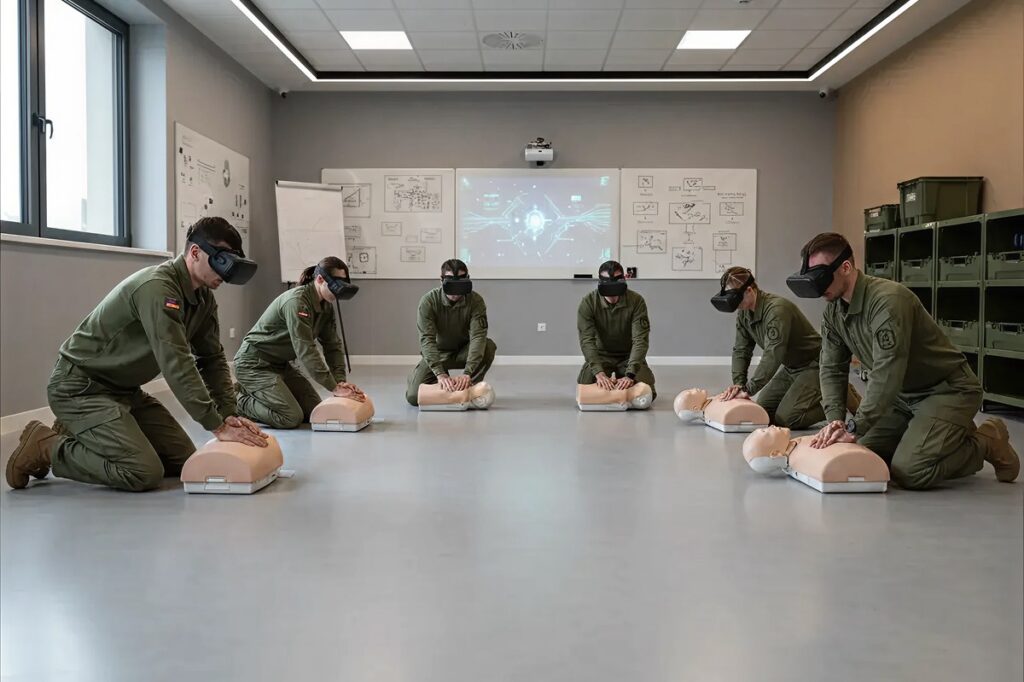
3. Tactical Medical Training
Medics and soldiers can use XR hardware to performe virtual emergency procedures on interactive 3D patients. These modules support trauma response, CPR, battlefield triage, and use of field equipment, helping improve reaction time, muscle memory, and critical decision-making under stress.
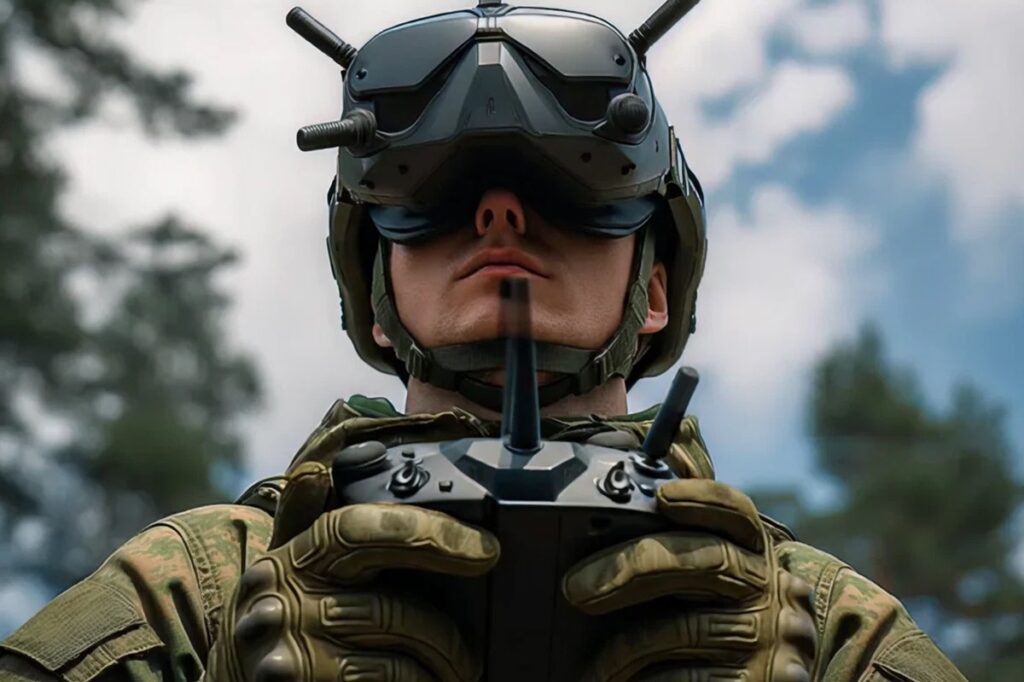
4. Remote Vehicle Operation
Personnel can practice operating unmanned ground or aerial vehicles in real-time missions through XR simulators. This includes surveillance, obstacle navigation, and strike operations, all while monitoring environmental variables. Training improves precision and reduces the learning curve for controlling advanced remote systems.
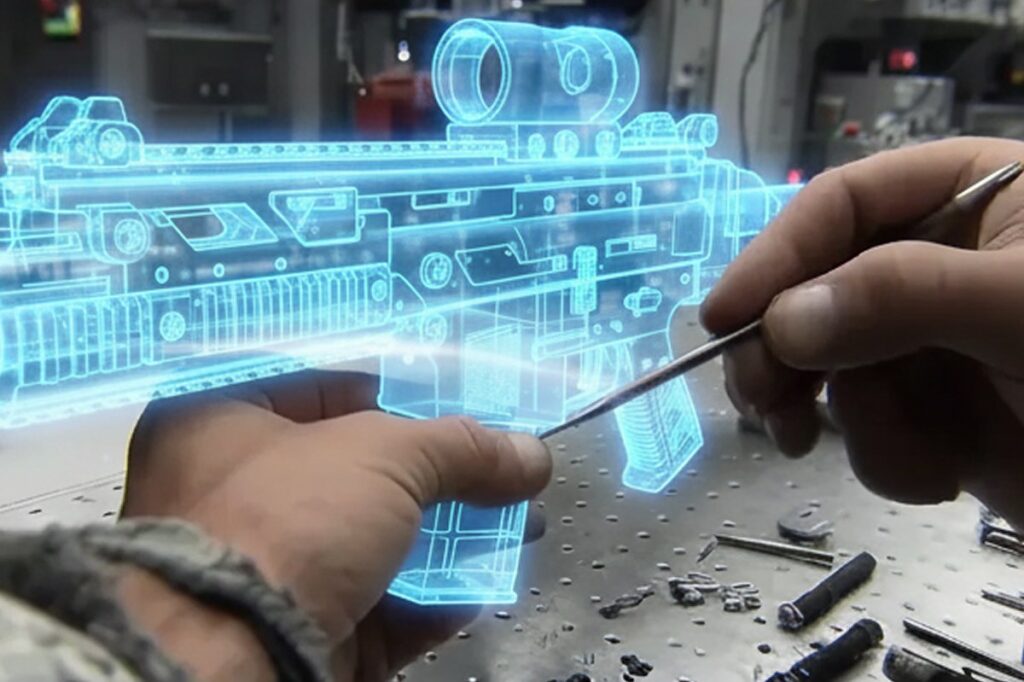
5. Equipment Assembly and Maintenance
AR overlays guide soldiers through step-by-step disassembly, repair, and reassembly of complex military equipment, from firearms to armored vehicles. Digital annotations help reduce instructor dependency, ensure procedural accuracy, and speed up technical onboarding for maintenance crews.
6. Mission Planning and Team Strategy
Teams collaborate in shared virtual spaces to plan operations using real-world terrain data. They can map routes, simulate enemy positions, rehearse tactical approaches, and analyze potential outcomes. XR supports clearer communication, better coordination, and faster contingency planning.
“We work in the fields of UI/UX design, interiors, photography and art direction. ”
the benefits of vr military training for the defence industry
Real Training with Zero Risks
Immersive simulations recreate high-pressure scenarios with complete safety.
Teams can practice mission-critical operations, tactical response, or emergency coordination, gaining real-world experience without real-world risk.
Smarter decision-making
AI-powered analytics interpret mission data in real time, supporting faster, more accurate decisions.
From predictive maintenance to strategic forecasting, artificial intelligence becomes a trusted ally.
Enhanced situational awareness
Augmented reality overlays critical data directly into the field of view: maps, movement tracking, or equipment status, enhancing focus and reaction speed when seconds matter most.
Collaboration without borders
Shared virtual command centers and simulations enable cross-branch and cross-nation collaboration.
Teams can plan, brief, and execute together in real time, no matter the distance.
Human-centered innovation
AI and XR augment human ability rather than replace it, empowering personnel with sharper instincts, faster reflexes, and deeper understanding of the mission ahead.
Sustainable operations
Virtual training minimises resource use, reduces travel, and lowers costs, while maintaining operational excellence.
Efficiency and responsibility go hand in hand.
Frequently asked questions
How We Help You Transform Military Training
1.What is VR for military training?
VR for military training refers to immersive virtual reality simulations that enable soldiers to rehearse missions, combat scenarios, vehicle operations, and tactical procedures in fully digital environments. These simulations reduce risk, cost and logistical burden compared to live training exercises. For example, units can undertake urban warfare drills, remote-vehicle operations or equipment maintenance in VR before entering real-world operations.
2.How do AI-powered VR military simulations and AR/VR in defence training deliver measurable benefits?
Adaptive virtual adversaries and changing environment scenarios that evolve with trainee decisions, improving decision-making under pressure.
Enhanced readiness and confidence: trainees report improved performance, faster skill acquisition and greater realism without the associated risks of live drills.
Cost and resource efficiency: fewer physical resources required, scalable virtual training across multiple locations or remote deployment.
3.What types of training programs can be enhanced with AI and VR technologies in the military context
Combat and tactical mission rehearsal (room-clearing, urban combat, joint operations).
Vehicle and aircraft simulators (unmanned aerial vehicles, ground vehicles, cockpit simulators).
Equipment maintenance and logistics training using AR overlays within VR or mixed reality.
Medical, rescue and CBRN (chemical, biological, radiological, nuclear) training in high-risk scenarios without real-world danger.
4.How should a defence organisation evaluate and implement a VR/AR military training system with AI?
Alignment of the training scenario with actual mission needs and environment realism (terrain, threat types, team coordination).
Integration of AI for adaptive scenario generation and analytics for performance tracking.
Hardware and software compatibility—headsets, VR rooms, networked simulation environments, remote-access capability.
Data capture and after-action review: measuring trainee decisions, reaction times, team metrics and improvements.
Scalability, repeatability and cost-efficiency—ensuring the solution supports frequent training cycles and remote access.
Change-management: ensuring instructors and trainees adopt XR tools and the environment supports blended training approaches.
5.Why partner with YORD Studio for AI, VR & AR military training solutions?
YORD Studio offers end-to-end immersive training services tailored for defence: from concept definition through simulation build, hardware integration, deployment and analytics. We help defence organisations:
Map your training needs and mission profile into realistic VR/AR scenarios.
Develop adaptive AI-driven simulations and VR military training platforms that replicate operational complexity.
Deploy accessible, scalable training solutions suitable for both classroom, field and remote bases.
Provide performance dashboards, data analytics and iterative improvement to maximise ROI and training effectiveness.
In choosing a specialist partner like YORD, you access bespoke AI VR military training solutions, AR/VR defence training programs, and a strategic approach designed to advance readiness, not just novelty.
Got a vr idea? Make it reality.
Simply send us a message through a form or call us directly if you prefer. We will get back to you within 24 hours.
By clicking the "send" button, I agree with collecting and processing my personal data as described in the Privacy Policy.